The Quality of European Integration Reforms: Why Ukrainian Laws Often Remain on Paper
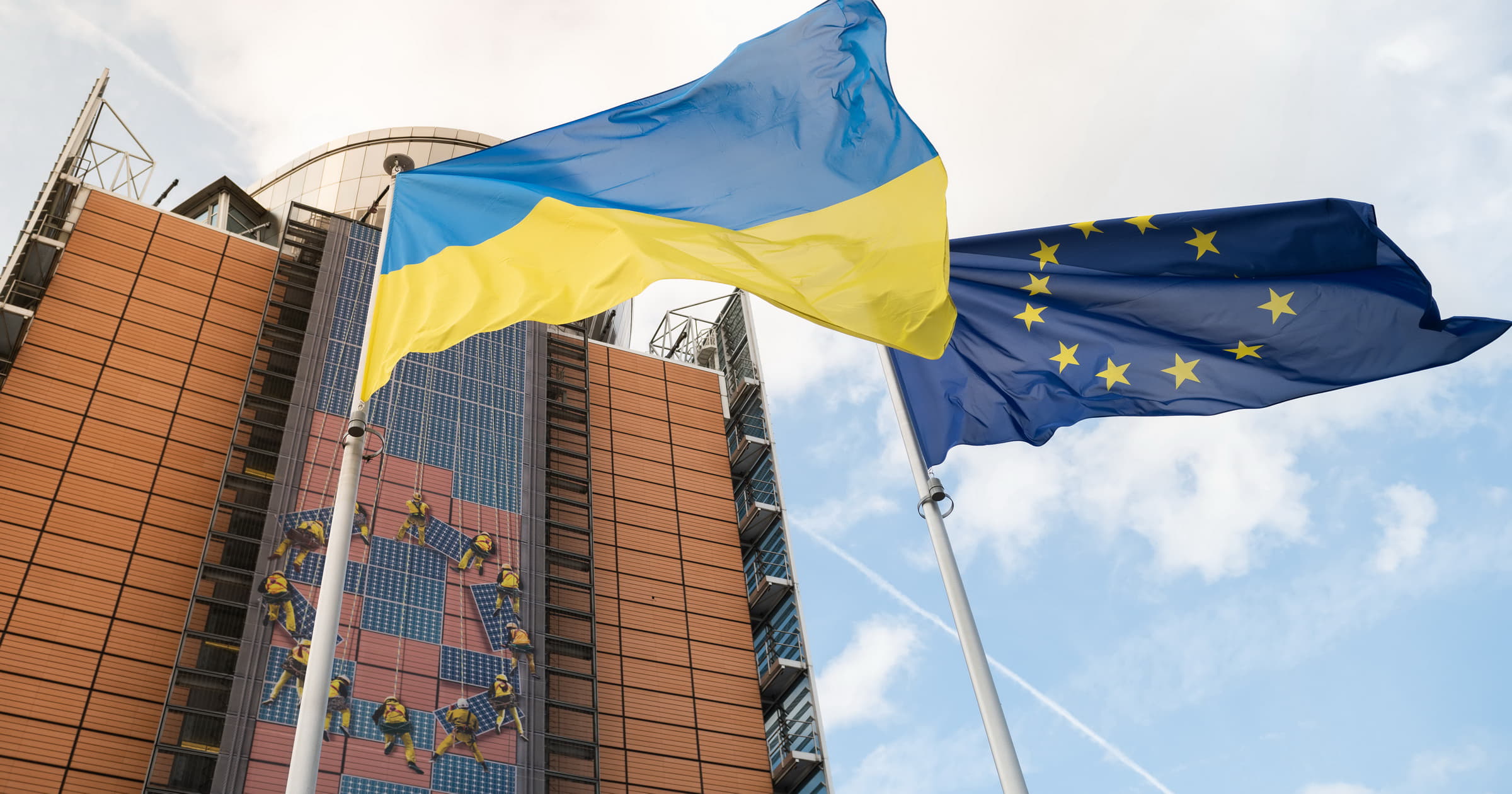
The European Commission's new report on Ukraine highlights systemic issues in implementing reforms. Laws are adopted, but the lack of resources and practical mechanisms hinders actual changes.
 🧠AI Analysis
Photo: Ukrainska Pravda
Key points
- The European Commission noted partial implementation of recommendations and public administration issues.
- Administrative courts created in 2025 are still non-operational due to resource shortages.
- Waste management reform faces ongoing delays in drafting secondary legislation.
- Practitioners and businesses need to be involved in drafting legislative initiatives.
Systemic Gaps in Implementing European Integration Changes
The European Commission has released its report on Ukraine, reigniting the discussion on the quality of public administration planning. Despite the active involvement of international consultants and the funding of expert projects, many recommendations from previous years remain unfulfilled or only partially implemented. A recurring situation arises where the state reports on adopted laws, yet expected practical outcomes are not achieved due to the absence of workable enforcement mechanisms.
A telling example is the situation surrounding specialized administrative courts established back in 2025, which still remain non-operational due to a lack of judges, funding, and formed staff. Similar difficulties persist in waste management reform, where the law entered into force in the summer of 2023, while the necessary regulatory framework and procedures are still being drafted. Such gaps between adopted decisions and reality force businesses and citizens to overcome procedural hurdles on their own.
Impact on Local Communities and the Economy
For residents of Ukrainian communities, such delays mean a postponed effect from European integration transformations. When reforms are planned without considering actual technical capabilities, funding, and local staffing, the burden falls directly on enterprises and municipal authorities. As a result, instead of quality services and rights protection, citizens face bureaucratic barriers and dragged-out processes.
Experts emphasize the need to involve practitioners—business representatives, communities, engineers, and lawyers—at the initial stages of drafting solutions. Their foresight can prevent the adoption of unviable norms. Without verifying the readiness of the entire system before launching new rules, the state risks wasting resources on formal task execution rather than achieving genuine progress.
Source Ukrainska Pravda — pravda.com.ua/columns/2026/11/23/8064137/ ↗
Read next
 ⚽Sport
Kamianske Sports Arena Hosts Large-Scale Open Kyokushin Karate Tournament
The Prometheus sports complex hosted the Open Oyama Cup, bringing together around 300 participants from various Ukrainian regions as a final test ahead of the European ch…
 🛡️Security
Orbital Threat: Western Intelligence Warns of Russian Plans to Deploy Nuclear Weapons in Space
Leading Western intelligence agencies warn that Russia may launch a satellite equipped with a nuclear warhead into Earth's orbit in the coming weeks.
 🛡️Security
Jet-powered 'Geran-5' drones: experts assess new infrastructure threat
Russian forces have begun deploying upgraded jet-powered drones with significantly higher speeds and destructive power compared to standard 'Shahed' models.
 💼Economy
Crisis at ArcelorMittal: Experts discuss easing the tax burden on the enterprise
The shutdown of production at Ukraine's largest steel plant has sparked a debate over the need to review the company's tax obligations.
 👥Society
Mild winter and temperature anomalies: what weather to expect in early December 2026
Climatologists predict a warmer start to the winter of 2026 in Ukraine with above-normal temperatures, though occasional cold snaps and sleet are possible.
 🏛️Politics
Finnish Lawmakers Consider Building Border Fortifications with Russia Inspired by Ukraine's Experience
Finnish parliament members are discussing the construction of anti-tank barriers and fortifications along the Russian border during peacetime, drawing lessons from the wa…